Hybrid certainly applies in the
context of Ursula and drop bar mountain bikes have been around since the
mid-1980s. There is a solid argument, (even if you don’t necessarily agree with
it) that gravel bikes are in fact hybrids of road and mountain bikes. I lean
toward them being the love child of cyclo cross and rigid 90s cross country
mountain bike. The trend for converting 90s cross country mountain bikes to
drop bar gravel machines is perhaps predictable. Something I can certainly get
my head around.
Afterall, Denise is a late 80’s
mountain bike frameset modified to run 700c wheels. That said, like most
trends, I’m of the opinion there should be nuance and not a cult or heard like
wholesale movement. Early 90s cross country mountain bikes were very capable
and engaging machines that handled beautifully.
My 1990 Kona Lava Dome was a case
in point. There was a genre called hybrid, which featured flat bars and slowly
died a death as the 90s wore on. The higher end models boasted Reynolds 531 and
similar grade tubesets- closer to a flat bar tourer with bigger tyres. However,
the majority tended to be marketed as commuter steeds with an upright stance,
wider saddles lower grade tubing and components.
Mudguard and rack mounts and with
clearance for 35-38mm meant they made serviceable town hacks and utility bikes. I was quite drawn to the Orbit Frontier,
which was a drop bar 531 tubed rough stuff tourer with clearance for 700x38c
tyres inc full length mudguards.
Marketed as the best of both
worlds, the press felt it was too compromised, master of none, essentially. Top-mounted
thumb rather than bar end shifters were an example of this and a really strange
choice for a drop bar small scale production build. The most commonly
remembered frontier was their 531 tubed mountain bike dressed in Shimano XT.
Quality control was problematic during this period but turned around under Lee
Cooper’s supervision.
Muddy Fox Trailblazer was another
curious beast- drop bar mountain bike with bar cons and 26x1.75 tyres. Similar
theme to Specialized’s Rock Combo, but a little earlier- I spotted it in
“Bicycle” magazine back in March 1987. Both
machines were well ahead of their time and in my view, the epitome of ATB (All
Terrain Bikes). Neither I would pay classic prices for, mind. Sentimental I may
be, stupid I am not.
Back to 2026 and I’ve reached my
conclusions about the Sidi Algor and decided to try a different front mudguard
on Ursula. I’d been buying in some consumables and spotted a reasonably sturdy
reinforced plastic model, which would also mean free postage, so took a punt.
I’ wanted something with more coverage than the existing shorty fender- I’d reversed
it to see if there was any improvement in mud protection. No, is the answer,
but a worthwhile experiment.
Rain, mud and slurry had given
way to icy winds and tumbling temperatures over Christmas-perfect for testing
winter gloves and similar attire. The gritters had been out, prompting the
switch to Denise and the Schwalbe Marathon Winter tyres, providing dependable
grip and feedback as I hustled through the lanes. Curiosity and the urge
to experiment got the better of me, so I raised the bars slightly and whipped
some other lights atop the Gaciron Cetus 1700 Gaciron
Cetus 1700 Underneath Bike Light | cycling-not-racing mount.
Not because the Gaciron Cetus
could ever be described as lacking, but I hadn't charged it in a while and
didn't want to be plunged into darkness several miles from home. I had
the Magicshine Hori 1300 Magicshine
HORI 1300 Front Light | cycling-not-racing to hand and was relieved to
discover the mount took its 200plus grams in its stride, same story when I
substituted for the Magicshine Ray2600, which was a bigger surprise.
Arguably the best fit was this See Sense Beam, which weighs a feathery 59g.
While dynamos are bright and
highly dependable, I like a powerful backup, just in case- comes in handy
should I need to tackle a flat, or similar roadside mechanical by the roadside.
Similarly, while the Exposure Revo is a beautifully made and relatively
powerful lamp, 800lumens is a little underpowered for backroad blasting, adding
another 500 or so makes a very tangible difference, while sipping reserves-at
least on a more powerful torch-type rechargeable system.
Similarly, I usually carry a
spare rear light-failures are infrequent but do happen and are at best
inconvenient. One old favourite is Nite Rider's Cherry Bomb- the 100-lumen
version. Aside from being very bright, it was fuelled by AAA cells and enjoyed
a seriously generous run times and would withstand being frozen- I left one
submerged on a very chill winter day and it passed the ice bucket challenge
with flying colours.
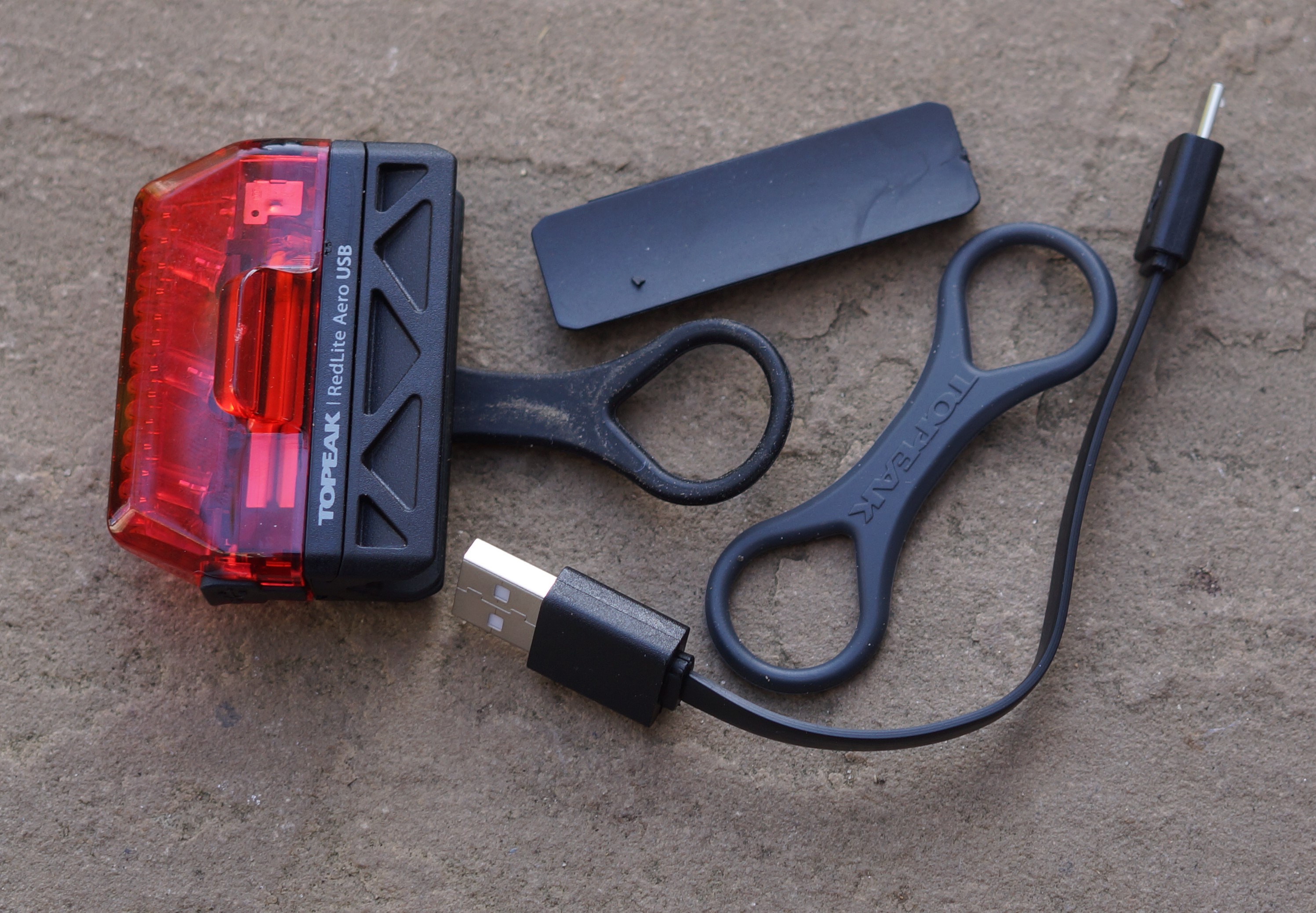
Topeak Redlite Aero Topeak
Redlite Aero USB Rear Light | cycling-not-racing and its Mega stablemate
are two further good examples of lights with AAA options. The former is only
two modes- steady and flashing. Arguably all we strictly need, but sometimes a
choice of flashing modes is nice, especially if navigating city centres with
competing illuminations, or when fitted to a trailer, or tagalong.